
Review · VIENNA
Vienna: Romantic Old Town 2-Hour Discovery Tour
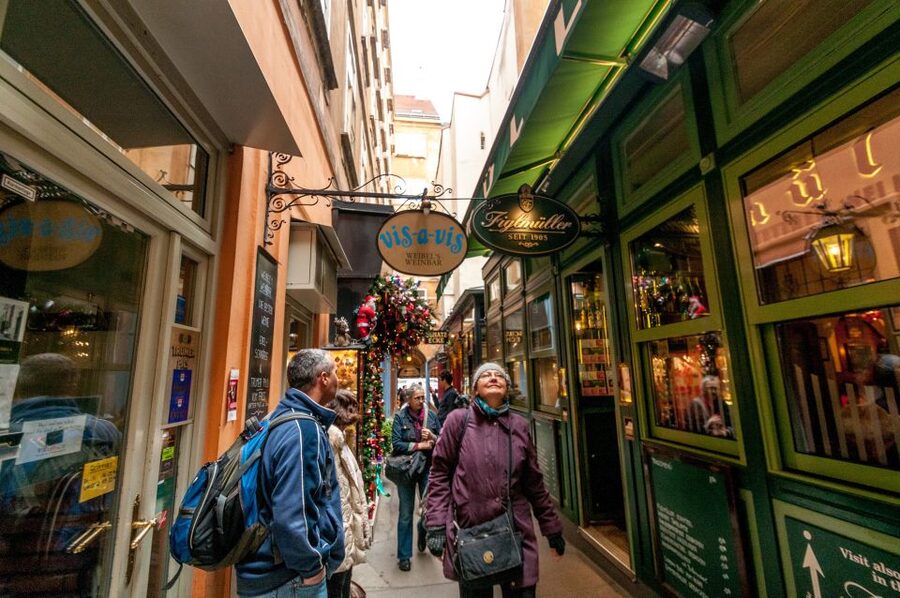
Vienna’s old town gets more interesting when you look past the grand boulevards. This two-hour private walk starts at the Anchor Clock and moves into places many first-time visitors miss: the Greek Quarter, the old university district, cramped medieval lanes, and quiet courtyards. I especially like the way the tour links architecture with everyday life, rather than treating the center as one long parade of famous buildings.
I also like the small scale. A private group of up to seven lets you ask questions and keep the pace sensible, while the guide can focus on the parts of Vienna that interest you most. Guides Wolfgang Auinger and Max have received especially strong praise for clear, engaging talks. The main drawback is the price: at $352 per group, it is good value for a full party of several people, but expensive for one or two.
Key points to know
- The Anchor Clock is the starting point: Hoher Markt brings together Roman, Jewish, political, commercial, and architectural stories in one square.
- The Greek Quarter adds a less familiar side of Vienna: Trading, Ottoman conflict, and Greek independence all appear in this compact Danube-side district.
- Six themes keep the walk varied: You move from architecture and legends to courtyards, narrow lanes, and the old university quarter.
- The tour looks above and behind the main streets: Gothic towers, Baroque palaces, Rococo rows of houses, Art Nouveau details, and Renaissance courtyards all appear.
- A private group changes the value equation: Up to seven people can share the flat group price, making it more appealing for families and friends.
- Plan for a history-led walk, not a food outing: Food and drinks are not included, and the two-hour route is built around explanation and observation.
Why this old-town walk is different
Many Vienna walks stay close to the city’s biggest names. This one takes a more curious route through the center, using six subjects to show how the city developed over time.
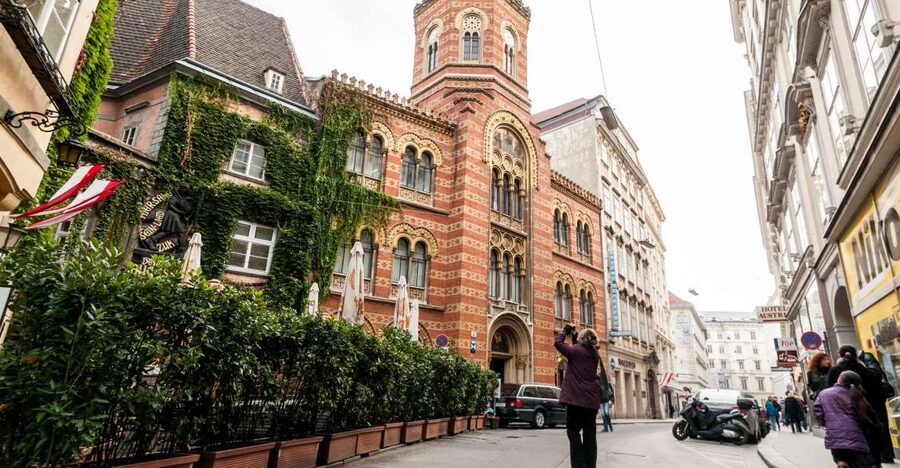
That approach matters because Vienna can seem polished and uniform at first glance. Look closer and you find medieval paving, medieval towers, Renaissance courtyards, Baroque city palaces, Rococo house fronts, grand nineteenth-century buildings, and Art Nouveau decoration. The tour gives you a system for reading those changes instead of simply pointing at one impressive facade after another.
The guide also connects public places with less visible stories. A square may tell you about water, trade, religion, and political power at once. A church may reveal a contest between painters and architects. A narrow street may make you think about sanitation and daily life in the Middle Ages.
I would choose this walk early in a Vienna visit if you want to understand the old town before spending time inside its major museums and palaces. It gives you a useful mental map, though it does not replace a full palace visit or a dedicated art tour.
More Two-Hour Experiences in the world:
- Heidelberg: City of Romance 2-Hour Walking Tour
★ 4.8 · 60 reviews - Private Romantic cruise with sparkling wine- 2-Hour- Lisbon
★ 4.9 · 52 reviews - Lisbon Private Romantic 2h Cruise with sparkling wine-Day/Sunset
★ 5.0 · 24 reviews
Starting at Hoher Markt and the Anchor Clock
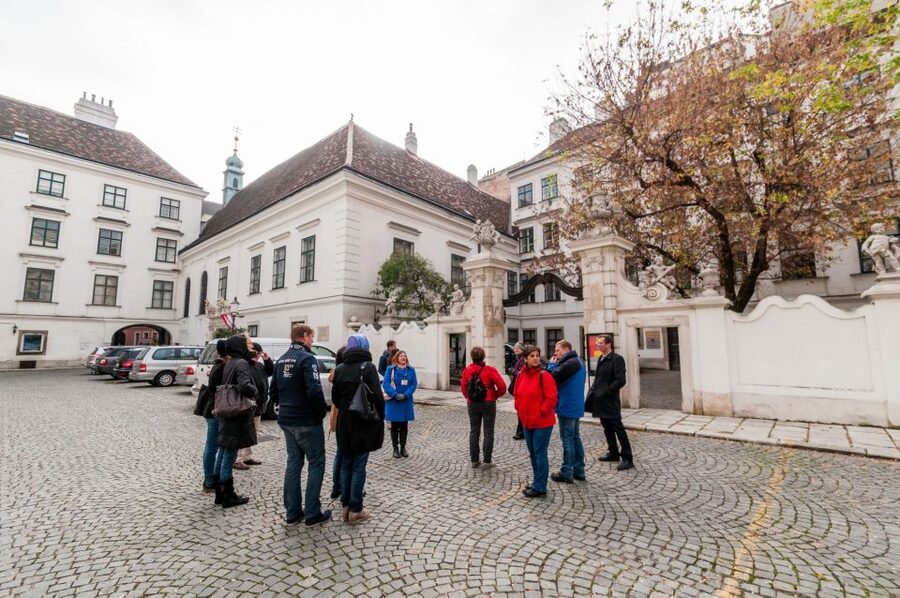
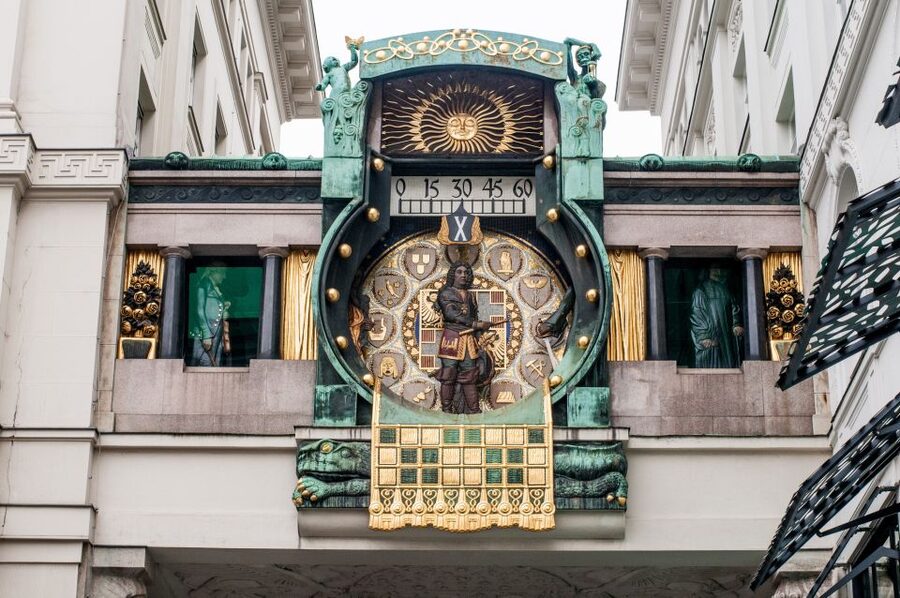
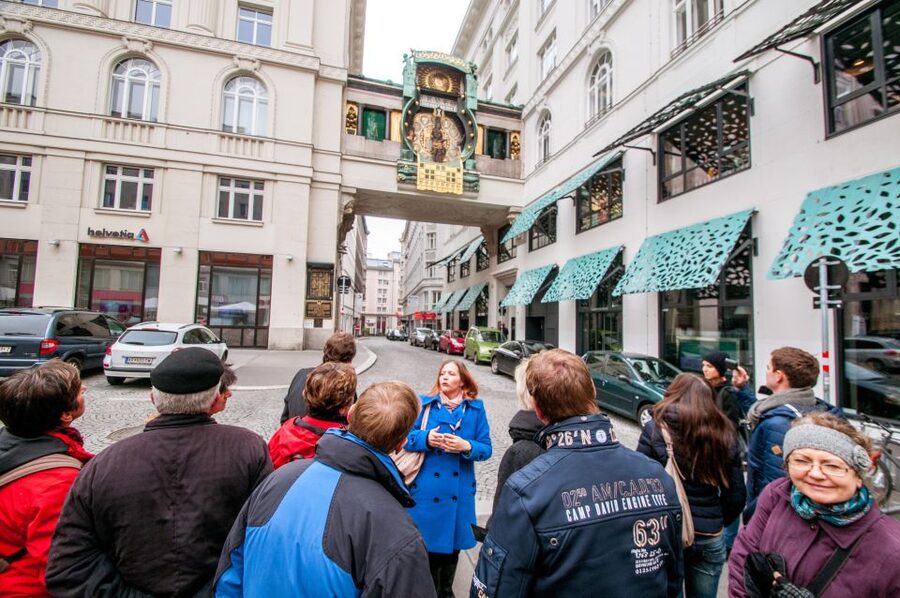
Meet at the Anchor Clock on Hoher Markt, arriving 10 minutes before the scheduled start. This is a practical meeting point in the center, and it launches the tour with one of Vienna’s more unusual public clocks.
The clock is not just a timepiece. It contains surprises that the guide can explain as part of the square’s long story. Hoher Markt has attracted politicians, architects, tradespeople, and other figures for centuries, so the opening discussion quickly moves beyond decoration.
This first stop also introduces the tour’s theme of layers. The square brings together Roman associations, Jewish history, commerce, political ambition, and civic improvements such as Vienna’s first public waterworks. You get a sense of why this part of the old town rewards slow looking.
The oldest building in Vienna is also connected with this opening section. The supplied details do not identify it by name, so you should expect the guide to point out the building and explain its place in the city’s story rather than assume you will be entering it.
Hoher Markt can be a busy urban space, and the Anchor Clock is a visible landmark, but give yourself extra time to locate the exact meeting point. Arriving early is wise, especially if you are unfamiliar with the center.
Following the Greek Quarter toward the Danube
The Greek Quarter occupies the innermost arm of the Danube River and has been shaped by trade for centuries. This part of the walk changes the tone. Instead of focusing only on imperial Vienna, you get a closer look at merchants, immigrants, conflict, and political movements.
The neighborhood carries traces of Turkish fighting and of Greek efforts connected with the struggle for independence. That makes it a useful reminder that Vienna’s story was never limited to the Habsburg court or its grand ceremonial streets.
I like this section because it gives the old town a wider frame. Trade brought people, beliefs, and ambitions into contact. The result is a district where the guide can point out clues in the streets and buildings, then explain how they connect to larger events.
Do not expect a long separate excursion beside the river. The tour lasts only two hours and covers several subjects, so the Greek Quarter is one part of a compact route. Its value comes from the context and the guide’s explanation, not from a long stop at one single sight.
Reading six centuries of Vienna architecture
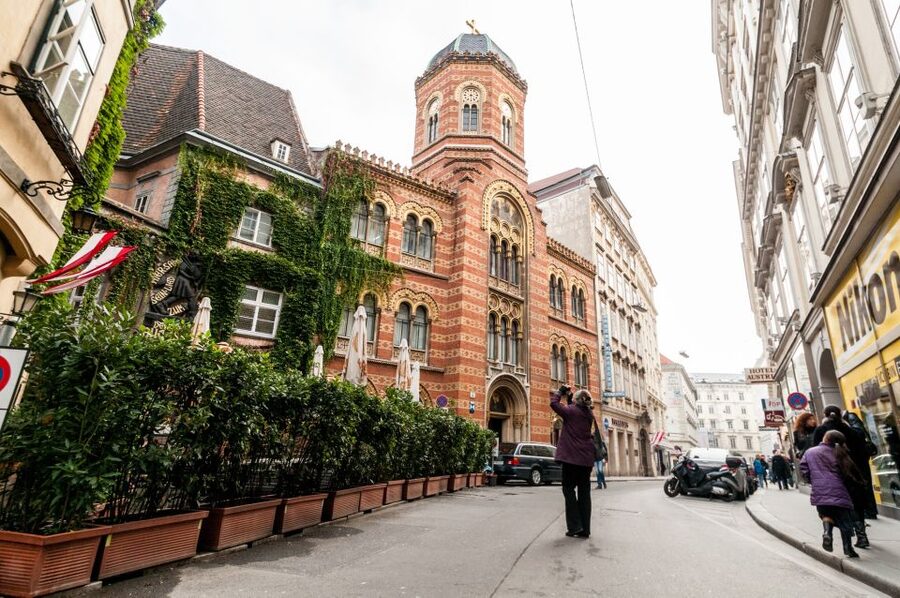
The architectural section may be the most useful part for anyone who likes to understand what they are seeing. Vienna’s center is a visual timeline, but the styles are mixed together rather than arranged in neat museum rooms.
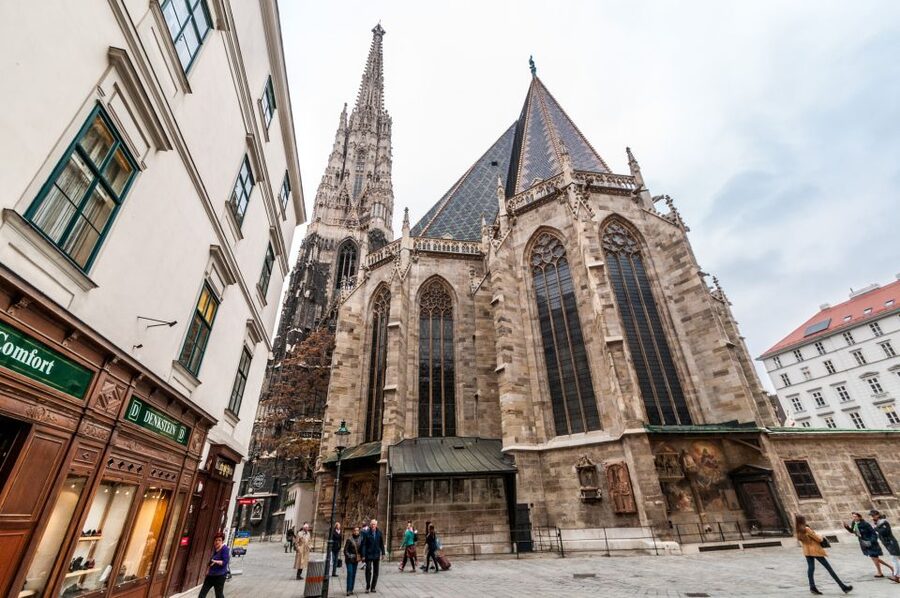
You may encounter Gothic residential towers, rough medieval paving, Renaissance back courtyards, Baroque palaces, Rococo house rows, grand Gründerzeit buildings, and elegant Art Nouveau details. A guide helps you separate those periods and notice smaller features that are easy to miss when you are walking alone.
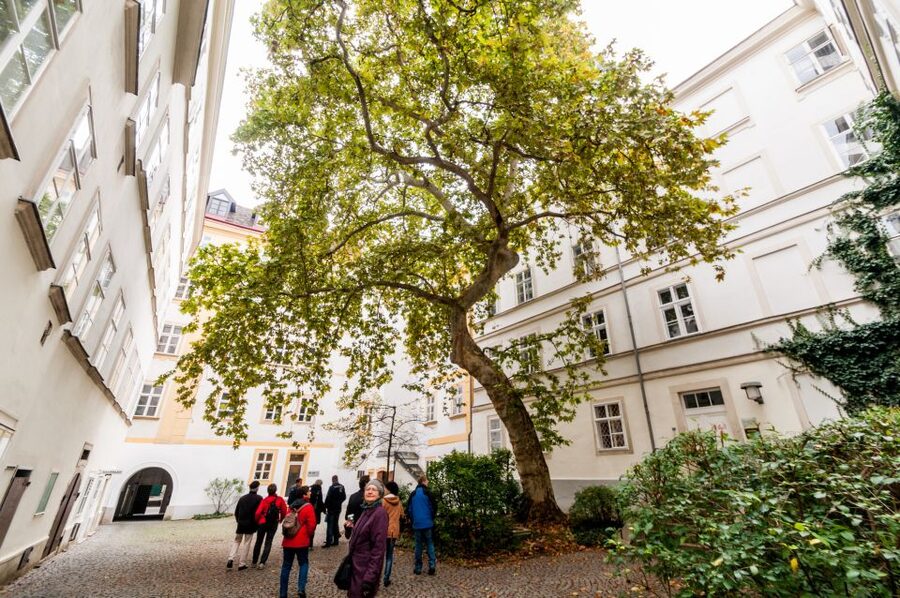
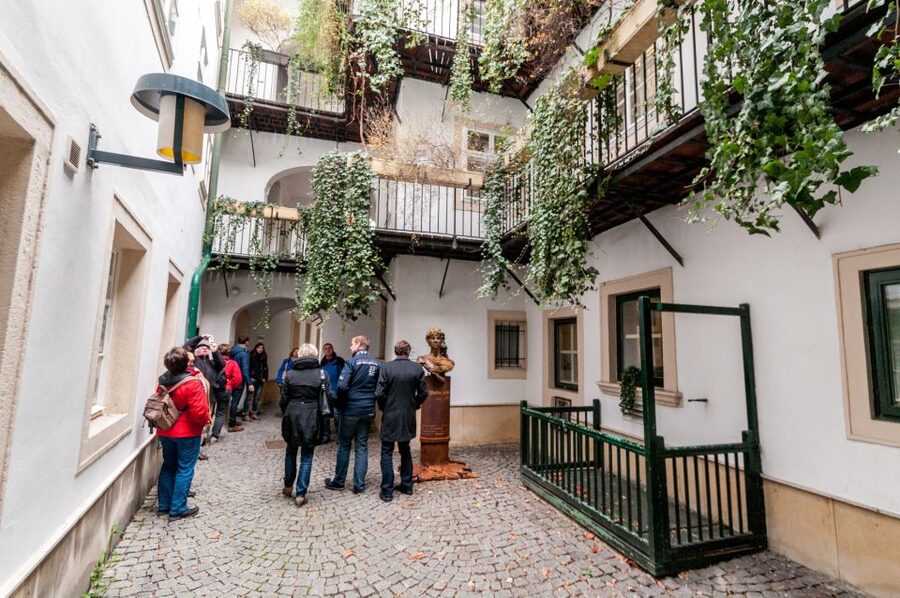
The tour’s focus on back courtyards is especially welcome. Street fronts often show the city’s public face, while courtyards reveal how homes, businesses, and shared spaces were organized. Since this is a private guided walk, you can ask about the features that catch your eye instead of following a fixed lecture.
The tradeoff is pace. Six themes in two hours means you will not receive a full architectural course. You will get a clear introduction and a set of visual clues that can improve the rest of your time in Vienna.
If you plan to revisit the center after the tour, pay attention to building fronts at different heights. The guide’s comments about periods and styles can help you notice how a Gothic element sits beside a Baroque facade or how later construction changed an older street.
More romantic experiences around the world:
- Romantic Venice: 30 Minute Gondola Ride with Serenade
★ 3.5 · 2,742 reviews - Paris: Romantic Cruise with 3-course Dinner on Seine River
★ 4.3 · 2,295 reviews - Dubrovnik: Romantic Sunset Cruise & Cave Visit with a Local
★ 4.7 · 611 reviews - Romantic Sunrise Balloon Tour in Majorca
★ 5.0 · 466 reviews
Myths, animals, and the stories on the walls
Vienna’s old town is full of stories created to explain strange events, unusual buildings, and symbols that later generations inherited. The myths and legends section adds a lighter thread to the walk, but it also shows how people made sense of the city before modern explanations were widely available.
Animals have an important place in these tales. You may see them worked into facades, fountains, and other decorations. Here, the guide can help you distinguish between a documented event, a traditional story, and a decorative symbol that gained meaning over time.
That distinction is valuable. A legend can be entertaining without being accepted as literal fact. The tour presents the gap between reality and storytelling as part of Vienna’s character, not as a problem to hide.
This section should suit families and anyone who enjoys stories with their history. If you prefer dates, political events, and architecture only, it may feel less substantial than the historical parts. The tour works best when you allow room for both fact and folklore.
Entering the old university and Jesuit quarter
The old university quarter sits in the center of the old town, with streets sealed off from traffic. That change in atmosphere matters. After the busier public spaces, the pedestrian setting gives the guide a calmer place to explain the area.
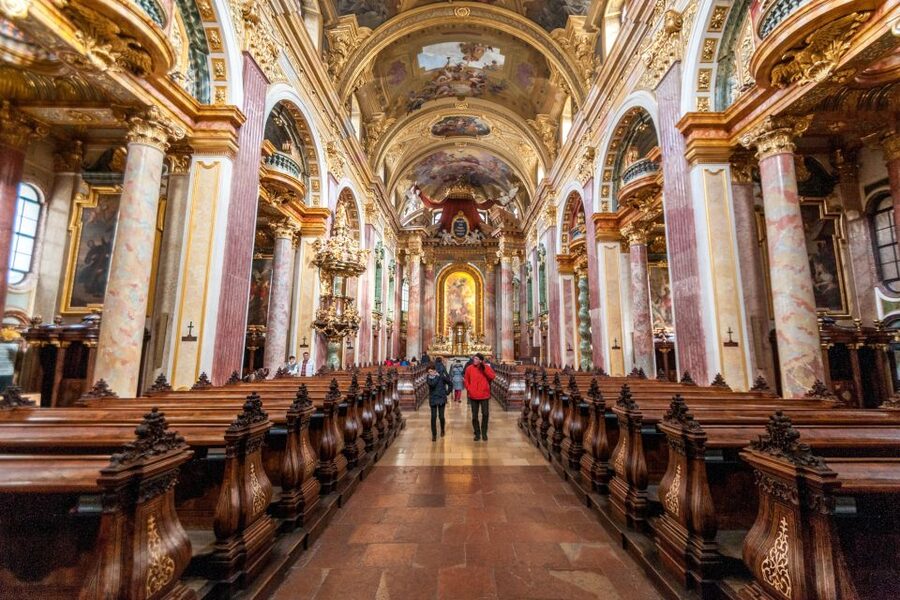
At the square’s fountain, you can look toward the interior of the Jesuit Church. The church is described as a strong example of Baroque excess, church power, and competition between painters and architects in Vienna.
That combination makes the stop more than a church photo opportunity. You are looking at a building as an argument in stone, paint, and ornament. The Baroque style was designed to impress, and the guide can explain how the church’s interior expressed authority while also reflecting artistic rivalry.
The information provided does not promise an extended interior visit or a special entry arrangement, so think of this as a guided look at the church and its setting. If you want a long examination of the interior, you may need separate time outside the tour.
The old university quarter is a strong stop for people interested in religion, education, and the way institutions shaped Vienna. It also breaks up the route with a quieter urban space.
Narrow lanes and courtyards where Vienna feels older
The final theme turns from major places to the shape of the streets themselves. Many lanes in the old town wind, narrow, and refuse to run in straight lines. That irregularity gives the center much of its character.
A guide can make these lanes feel meaningful rather than merely picturesque. The route asks you to imagine medieval daily life, including poor hygiene and the practical problems of living in tight quarters. Even opening a window, according to the tour description, could have been an unpleasant experience.
That detail gives the old town a needed dose of reality. Vienna’s elegant facades can make the past look tidy. The narrow streets and courtyards remind you that historic buildings were once working homes and businesses, with all the noise, smells, and crowding that implied.
You should wear comfortable shoes. The tour is only two hours, but it is a walking experience through old streets and medieval paving. The information does not specify the total distance or accessibility conditions, so anyone with mobility concerns should ask the operator before booking.
How the six themes work together
The six subjects are not isolated stops. They build a picture of Vienna from several directions:
- Roman, Jewish, and trading connections show how power and commerce shaped the center.
- The Greek Quarter adds migration, conflict, and links to the eastern Mediterranean.
- Architecture reveals how the city changed across centuries.
- Myths and animal symbols show how people gave meaning to unfamiliar sights.
- The old university quarter connects religion, education, and artistic competition.
- Narrow lanes and courtyards bring the discussion down to ordinary living conditions.
I like this structure because it avoids a single narrow story. You are not hearing only about emperors, churches, or famous composers. You are also looking at traders, water systems, street planning, faith communities, and the people who lived behind the grand fronts.
The guide’s style will shape the experience. Wolfgang Auinger has been praised for a charming, engaging walk, while Max has been singled out for clear delivery, motivation, and attention to details in the area northeast of and behind the cathedral. Another assessment found a guide friendly but too talkative, with more local humor than solid historical detail. That is useful to know: the experience can have a strong personal style, and you should request your preferred language and ask about the guide when arranging the tour.
Price, group size, and what you get
The price is $352 for a group of up to seven. That is not a casual budget walk, but the calculation changes if you fill the group.
For seven people, the cost works out to about $50 per person. For four, it is $88 each. For two, it becomes $176 each, which is hard to justify unless private guiding is a major priority.
The private format is the central value. You are paying for a guide’s attention, the ability to ask questions, and a route built around less obvious corners of the old town. A large group tour may cost less, but it may also give you less room to pause or redirect the conversation.
Food and refreshments are not included. That is no great hardship in Vienna, where you can plan a coffee or meal before or after the walk, but remember that the price covers the private guide rather than a tasting or restaurant stop.
The tour has free cancellation up to 24 hours before departure and lets you reserve now and pay later. Those terms are useful if your Vienna schedule is still changing. The activity also indicates skip-the-ticket-line access, though the main value here remains the guided walk through public streets and historic areas.
Who should book this Vienna walk
I would recommend it most strongly to:
- A family or group of friends that can share the seven-person price.
- First-time visitors who want a fast, clear introduction to the old town.
- Returning visitors who have seen the famous sights and want less obvious neighborhoods.
- Architecture fans who enjoy comparing styles from Gothic through Art Nouveau.
- People who prefer stories, symbols, and local legends alongside dates.
- Visitors who want a private guide in a language other than English.
It may be less suitable if you want a slow museum visit, a food tour, or a detailed examination of one landmark. The route covers a lot in two hours, so expect a lively overview rather than extended time inside every church or building.
The available guide languages include English, German, French, Spanish, Italian, Portuguese, Russian, Dutch, Chinese, Japanese, Arabic, and Korean for group arrangements. Contact the operator if you need a language other than the one shown when booking.
Practical advice for the two-hour route
Arrive at the Anchor Clock 10 minutes early. Hoher Markt is an easy place to identify once you are there, but the center can be confusing if you are rushing through unfamiliar streets.
Wear shoes suited to old paving and narrow lanes. Bring questions about architecture, religion, trade, or daily life, since the private format gives you a better chance to shape the discussion.
Keep your schedule flexible after the walk. You may want time to revisit the Jesuit Church, examine a facade, or stop for refreshments. Since no food or drinks are included, a cafe stop before or after is up to you.
If you are booking as a couple, compare the private price with other guided options. If you are booking with a family or full group, the numbers look much better and the private setting becomes a real advantage.
Should you book it?
Book this tour if you want Vienna explained through its side streets, courtyards, symbols, and mixed architectural styles, and if you can share the $352 group price. The six-part format gives you a quick but thoughtful introduction, while guides such as Wolfgang Auinger and Max add the personal detail that makes a walking tour work.
Skip it if you want a low-cost group outing, a food experience, or long indoor visits. For the right group, though, this is a useful way to see why Vienna’s old town is more than its grandest attractions.
FAQ
How long does the Vienna old town tour last?
The tour lasts two hours.
Where does the tour meet?
The meeting point is the Anchor Clock at Hoher Markt, 1010 Vienna.
How early should I arrive?
You should arrive 10 minutes before the scheduled start.
Is the tour private?
A private group option is available, with groups of up to seven people.
What languages are available?
Languages include German, Spanish, Chinese, Dutch, English, French, Italian, Japanese, Portuguese, and Russian. Group tours can also be arranged in Arabic and Korean, along with several of those languages.
Is food included?
No. Food and refreshments are not included.
How much does the tour cost?
The price is $352 per group of up to seven people.
Can I cancel for a full refund?
Yes. You can cancel up to 24 hours in advance for a full refund.
New for two around the world
- Sunrise Couple Photoshoot Tour★ 5.0 · 5 reviews
- Romantic Photoshoot in Venice★ 5.0 · 8 reviews
- Make your Romantic Proposal in the City of Love★ 5.0 · 11 reviews
- Romantic Sunrise Boat with Live Banaras Gharana Classical music★ 5.0 · 2 reviews
- Bali Private Couple Tour – Custom Itinerary★ 5.0 · 4 reviews
- Renew your wedding vows on a romantic gondola★ 4.5 · 3 reviews
- Tulum Photo Session for Couples, Friends, Families & Singles★ 5.0 · 2 reviews
- Mauritius Private Night Tour: Romantic dinner, Entertainments & Night lounge★ 4.0 · 4 reviews
Austria Romantic Experiences, side by side.
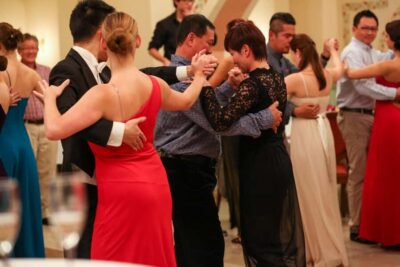
Vienna: Viennese Waltz Beginner Workshop for Couples
Read our review →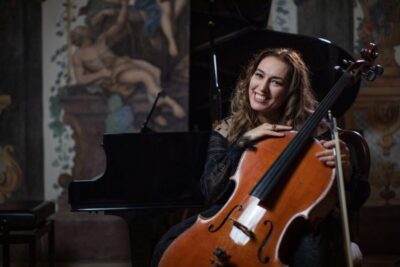
Vienna: Romantic Classics Piano, Violin, and Cello Concert
Read our review →
From Salzburg Romantic Carriage Ride through the Countryside
Read our review →
Füssen & Schwangau: Private Photoshoot Couples, Solo & Group
Read our review →
Lists this one appears in