
Review · VIENNA
Vienna: Romantic Classics Piano, Violin, and Cello Concert
Vienna’s Romantic Classics concert puts you close to the music in the frescoed Sala Terrena, a historic room just 150 meters from St. Stephen’s Cathedral. I like the intimate setting and the broad program, which moves from Beethoven and Mozart to Chopin, Liszt, Bach, Saint-Saëns, Massenet, and Schubert. The $69 price is fair for a 90-minute performance, though refreshments are not included and cash is needed if you buy a drink during the break.
I also like the choice of seating, from student and back-row tickets to places closer to the performers. The main practical concern is finding the right entrance: you enter through the gate at Deutschordenskirche, not simply through the Mozarthaus name on your booking.
Key points
- A frescoed Sala Terrena: The concert takes place in an expressive historic room with good acoustics and a close view of the musicians.
- A wide-ranging program: You’ll hear famous works by Beethoven, Chopin, Mozart, Liszt, Schubert, Brahms, Bach, Paganini, Saint-Saëns, Haydn, and Massenet.
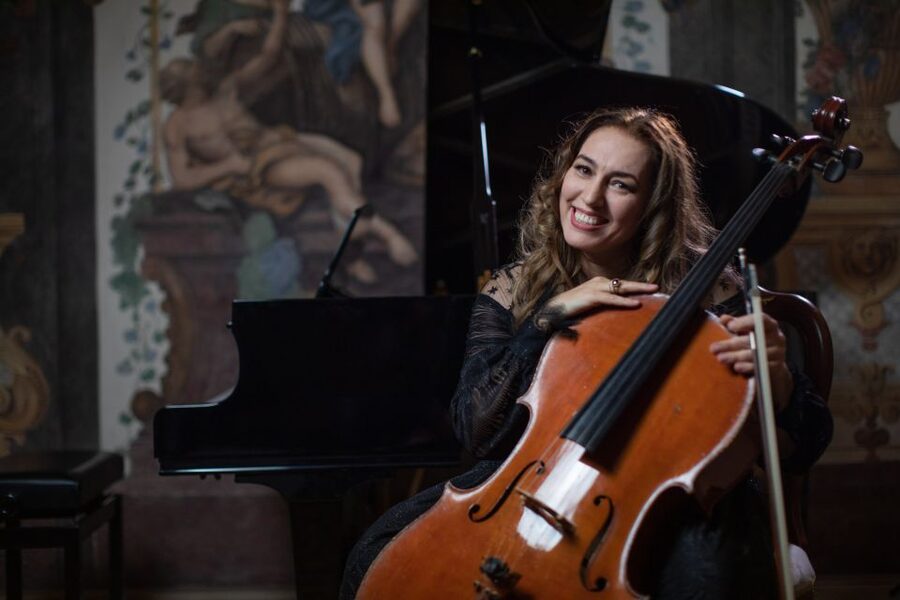
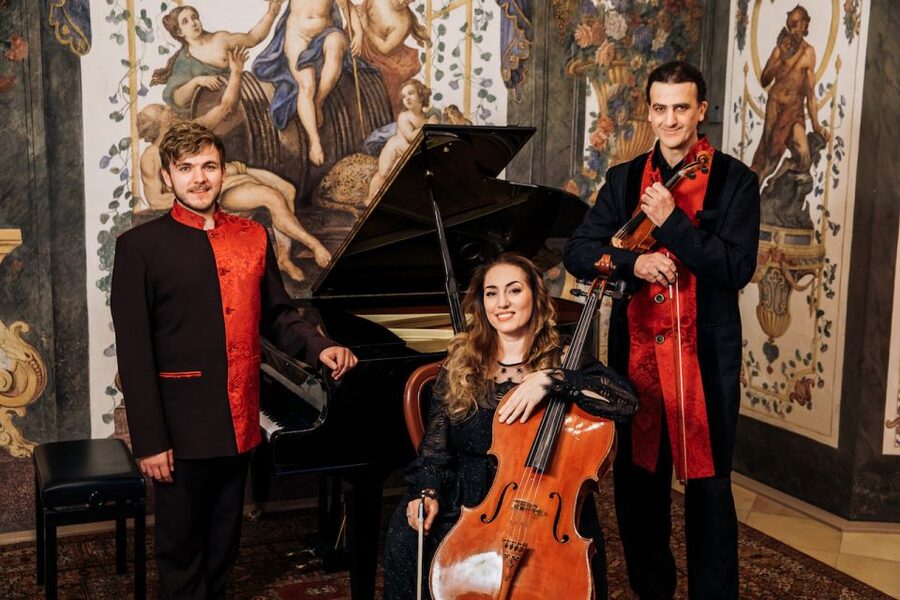
- Three featured musicians: Violinist Claudio Bentes, pianist Dushan Sretovic, and cellist Teodora Miteva perform across the evening.
- A central Vienna location: The entrance is 150 meters from St. Stephen’s Cathedral, making this easy to pair with an evening in the old center.
- Several ticket levels: Student, back-row, and closer seating let you match the cost to your budget and priorities.
- Simple booking terms: You can cancel up to 24 hours before the concert for a full refund, and reserve now while paying later.
Why this concert works for a Vienna evening
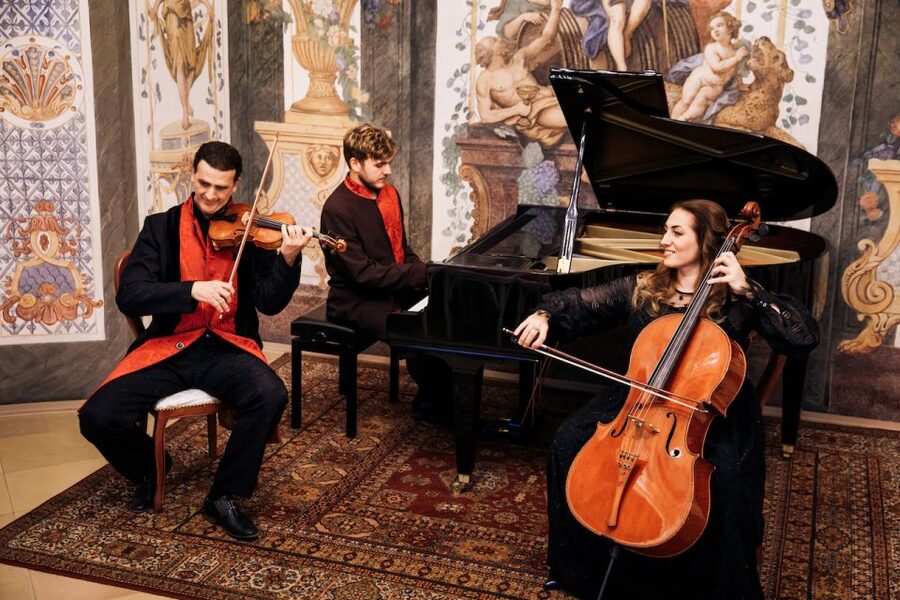
You do not need to be a classical music expert to enjoy this program. The pieces are short enough to keep the evening moving, and many are familiar from concert halls, films, radio, or piano lessons. The result is less like a single long symphony and more like a carefully arranged sampler of beloved classical works.
The program opens with Joseph Haydn’s Trio all’ungarese, including its Andante, Poco Adagio, and Rondo finale. Haydn gives the evening a graceful start, with the piano, violin, and cello sharing the musical conversation rather than leaving one instrument to carry everything.
Beethoven then appears twice in very different moods. The Moonlight Sonata, represented by its Adagio, offers the slow, reflective side of Beethoven. Later, the first movement of Sonata Op. 2, marked Allegro con brio, brings more force and energy. I like this contrast because it prevents Beethoven from being reduced to one familiar mood.
The rest of the evening follows that pattern. You move between tender melodies, demanding piano works, lyrical cello pieces, and fast passages that show the musicians’ technical skill. For a visitor with only one free evening, this variety gives you a good sense of the emotional range of classical music without requiring a full concert season.
More Concerts in the world:
- Paris: Romantic Piano Concert at Saint-Julien-le-Pauvre
★ 4.7 · 126 reviews - Bali/Benoa: 5-Course Romantic Evening Cruise With Live Music
★ 4.8 · 104 reviews - Your Romantic Dinner in Cancun, includes national open bar and live music
★ 4.5 · 37 reviews
Entering through Deutschordenskirche
The location is central, but the entrance deserves attention. The venue is 150 meters from St. Stephen’s Cathedral, one of Vienna’s easiest landmarks to use for orientation. Go to the gate at Deutschordenskirche, where you will find a poster stand for concerts at Mozarthaus.
Plan to arrive 15 minutes before the start. That gives you time to identify the gate, check your ticket, use the cloakroom, and find your seat without turning the opening piece into a scavenger hunt. The name Mozarthaus may lead you to expect a large, obvious concert building, but the actual entry point is through the church complex.
The central address is a useful advantage. You can combine the performance with dinner, a walk around Stephansplatz, or an evening visit to Vienna’s old center. Since the performance lasts 90 minutes, it fits neatly into a night of sightseeing without taking up an entire evening.
The concert is wheelchair accessible. English and German are available for the host or greeter, so you should be able to get basic arrival instructions in either language.
The Sala Terrena setting
The room is part of the appeal. The Sala Terrena is known for its decorative frescoes, and the setting gives the concert a sense of place that a modern hall cannot easily match. You are not entering a blank performance space. You are listening to music in a room with painted decoration, old-world character, and a relatively intimate scale.
That smaller setting affects the sound. You may hear the attack of the piano, the grain of the violin, and the lower warmth of the cello with unusual clarity. A concert setting like this can make the relationship between the instruments easier to follow, especially during a trio when the parts pass back and forth.
The tradeoff is that the room is not designed like a large modern auditorium. Seating matters more. The ticket choices let you select a student ticket, a back-row ticket, or a place closer to the performers. If seeing the musicians’ hands and facial expressions matters to you, paying for a closer seat may be worthwhile. If you mainly want the music and the room, the back row can offer a better price.
The venue includes a cloakroom, which is useful in Vienna during the colder months. You can leave a coat before the concert rather than trying to manage it beside your seat.
Meet the musicians through the program
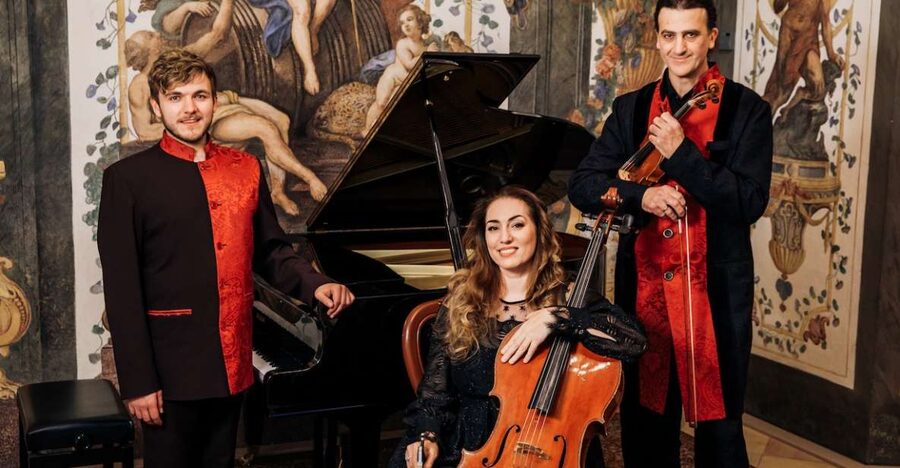
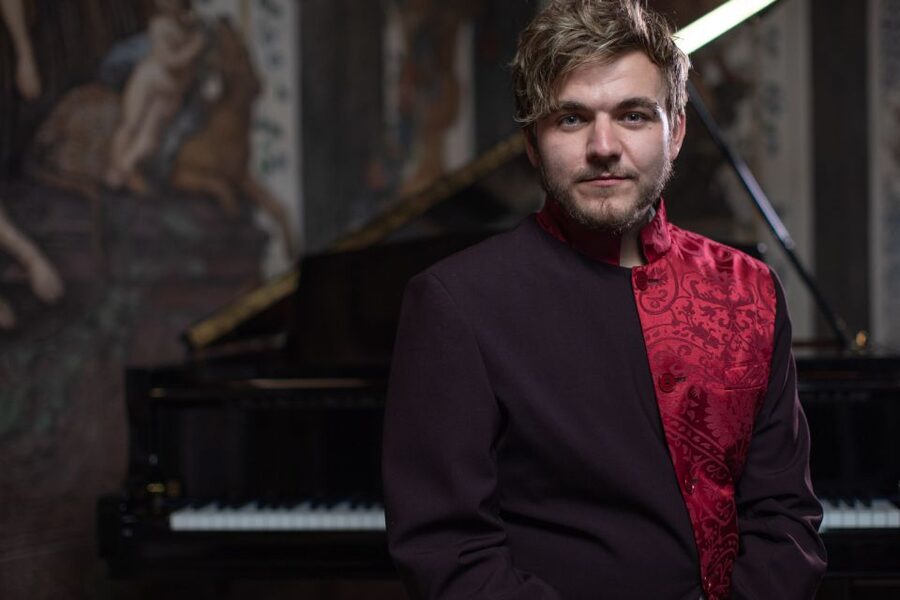
The event presents several named performers. Violinist Claudio Bentes is central to the concert’s identity, while pianist Dushan Sretovic is described as an award-winning pianist known for Chopin interpretations on international stages. Cellist Teodora Miteva is also presented as a soloist with competition experience.
Those details matter because this is not simply background music in a grand room. The program gives each instrument a chance to show what it can do. The piano receives several of the evening’s most demanding works, while the violin and cello receive featured moments that change the color of the program.
The listed works include:
- Haydn’s Trio all’ungarese, with its graceful slow sections and lively Rondo
- Beethoven’s Moonlight Sonata, Adagio
- Mozart’s La tartine de beurre, also known as Das Butterbrot
- Beethoven’s Sonata Op. 2, first movement
- Liszt’s Un sospiro
- Chopin’s Nocturne in C minor, Op. 48 No. 1
- Chopin’s Étude Op. 10 No. 1 in C major
- Bach’s Cello Suite in G major, BWV 1007, Allegro
- Paganini’s Caprice No. 13
- Saint-Saëns’ The Swan
- Massenet’s Thaïs Meditation
- Schubert’s Trio in E-flat major, Op. 100, Andante con moto
The exact balance between instruments may depend on the concert presentation, but this program clearly moves beyond a standard piano recital. It includes solo piano, solo cello, violin showpieces, and trio music.
More romantic experiences around the world:
- Romantic Venice: 30 Minute Gondola Ride with Serenade
★ 3.5 · 2,742 reviews - Paris: Romantic Cruise with 3-course Dinner on Seine River
★ 4.3 · 2,295 reviews - Vienna: Romantic Old Town 2-Hour Discovery Tour
★ 4.7 · 816 reviews - Dubrovnik: Romantic Sunset Cruise & Cave Visit with a Local
★ 4.7 · 611 reviews
The piano works: Beethoven, Liszt, and Chopin
Piano music takes a major role. Beethoven’s Moonlight Sonata is likely the piece many people will recognize first. Its Adagio is slow and inward, and it suits a quiet historic room. Do not expect the full sonata if the program lists only the Adagio. The evening is built around selected movements and individual works.
Beethoven’s Sonata Op. 2 brings a useful change of pace. Its Allegro con brio is brisk and assertive, with the kind of forward motion that shows Beethoven before his music became more monumental.
Liszt’s Un sospiro is a natural fit for a concert marketed around love and passion. It asks the pianist to shape long lines while handling difficult writing. You may find yourself watching the hands as much as listening, since the piece is known for its flowing, interwoven piano textures.
Chopin appears through two different works. The Nocturne in C minor, Op. 48 No. 1, is serious and dramatic, while Étude Op. 10 No. 1 in C major is a technical showcase. These pieces are a good test of the pianist’s control. One asks for atmosphere and emotional weight. The other demands speed, reach, and accuracy across the keyboard.
Dushan Sretovic’s association with Chopin makes these selections especially important. If Chopin is the main reason you are considering the concert, the program gives you both the poetic and athletic sides of his writing.
The violin and cello highlights
The evening is not all piano. Paganini’s Caprice No. 13 gives the violin a chance to take the spotlight. Paganini’s caprices are known for their technical demands, so this is one of the program’s more display-oriented selections. It adds brightness and risk after the darker piano works.
The cello receives Bach’s Cello Suite in G major, BWV 1007, specifically the Allegro. Bach’s cello suites are built around a single instrument, yet they can sound full and complete. This selection provides a more direct, unaccompanied contrast to the trio pieces.
Saint-Saëns’ The Swan and Massenet’s Thaïs Meditation bring a softer, more lyrical tone. Both are compact works with singing melodies, and they should appeal to you if you prefer expressive music over high-speed virtuoso passages.
The violin, cello, and piano then come together again for Schubert’s Trio in E-flat major, Op. 100, Andante con moto. This is the program’s closing work. Its slow movement is spacious and lyrical, with the three instruments sharing the melodic material. Ending with Schubert makes sense: it leaves the evening in a reflective rather than flashy mood.
Sound, seating, and the break
The room’s acoustics have received strong praise, and that matches what you should want from a chamber concert. In a smaller space, clarity matters more than sheer volume. You want to hear separate musical lines rather than one blended sound, and the Sala Terrena appears well suited to that.
Your seat can shape the experience. A closer position gives you a stronger visual connection with the performers. You may notice bow movement, piano technique, and the way the musicians watch one another. A back-row ticket can be a sensible choice if your priority is budget, though it may offer less detail visually.
The concert has a break, and the cloakroom is useful before and after the performance. One practical weakness is refreshment service. Drinks are not included, and any purchase during the break is made outside with cash. Bring some cash if you want a drink, and do not count on refreshments being part of the ticket.
Signage for the toilets during the break could also be clearer. This is a small issue, but it is worth knowing in a historic venue where modern wayfinding may not be obvious.
Is $69 a good value?
At $69 per person, this concert sits above a casual street performance but below the cost of many major evening productions in Vienna. You are paying for a formal 90-minute concert, a historic room, a central location, a cloakroom, and a program filled with famous composers.
The value is strongest if you care about the setting and want several composers in one sitting. A single concert featuring Beethoven, Chopin, Liszt, Schubert, Bach, and Mozart can be a practical choice when your Vienna schedule is tight.
The ticket becomes less attractive if you only want one specific work or expect a large-scale orchestral concert. This is chamber music in an intimate room, not a full orchestra in a grand concert hall. The student and back-row options help keep the cost down, while closer seats make sense if the visual side of the performance matters to you.
The included cloakroom adds a small but useful convenience. Refreshments are not included, and cash is required for drinks purchased during the break, so budget a little extra if that matters to you.
Who should book this concert?
I would point this concert toward several types of visitors:
- You want a classical music evening close to St. Stephen’s Cathedral.
- You enjoy familiar melodies but do not want a single-composer program.
- You prefer chamber music, where individual instruments are easy to hear.
- You want to sit near the performers and watch the technique up close.
- You are visiting Vienna with limited time and need a 90-minute event.
- You want a cultural activity that works for both first-time listeners and experienced concertgoers.
It is also a good fit for couples, since the Romantic Classics theme and works by Chopin, Liszt, Schubert, Massenet, and Saint-Saëns create a naturally intimate mood. Families with older children or students may find the shorter format easier than a long opera or symphony.
You may want to choose another event if you need extensive food service, strong venue signage, or a large orchestral sound. The music is the focus, and the practical extras are limited.
Final verdict: a smart chamber concert in central Vienna
Book this concert if you want beautiful music in a small historic room, especially if Chopin, Beethoven, and Schubert are high on your list. The 90-minute format, central location, seating choices, and broad program make it easy to fit into a Vienna itinerary.
Choose a closer seat for the best view of Claudio Bentes, Dushan Sretovic, and Teodora Miteva. Pick the back row or student ticket if keeping costs down matters more than seeing every detail. Arrive 15 minutes early, enter through Deutschordenskirche, and carry cash if you want a drink during the break.
FAQ
How long does the concert last?
The concert lasts 90 minutes.
Where is the concert held?
The concert takes place in the Sala Terrena, reached through the gate at Deutschordenskirche.
How far is the venue from St. Stephen’s Cathedral?
The venue is 150 meters from St. Stephen’s Cathedral.
What languages are available?
The host or greeter can provide assistance in English or German.
Which musicians perform?
The featured musicians are violinist Claudio Bentes, pianist Dushan Sretovic, and cellist Teodora Miteva.
Which composers are included?
The program includes Haydn, Beethoven, Mozart, Liszt, Chopin, Bach, Paganini, Saint-Saëns, Massenet, and Schubert. Brahms is also included among the featured classical composers for the series.
Are different ticket types available?
Yes. You can choose from student tickets, back-row tickets, and tickets closer to the performers.
Is the venue wheelchair accessible?
Yes, the experience is wheelchair accessible.
Is a cloakroom included?
Yes, cloakroom service is included.
Can I cancel my booking?
You can cancel up to 24 hours before the concert for a full refund. You can also reserve now and pay later.
New for two around the world
- Sunrise Couple Photoshoot Tour★ 5.0 · 5 reviews
- Romantic Photoshoot in Venice★ 5.0 · 8 reviews
- Make your Romantic Proposal in the City of Love★ 5.0 · 11 reviews
- Romantic Sunrise Boat with Live Banaras Gharana Classical music★ 5.0 · 2 reviews
- Bali Private Couple Tour – Custom Itinerary★ 5.0 · 4 reviews
- Renew your wedding vows on a romantic gondola★ 4.5 · 3 reviews
- Tulum Photo Session for Couples, Friends, Families & Singles★ 5.0 · 2 reviews
- Mauritius Private Night Tour: Romantic dinner, Entertainments & Night lounge★ 4.0 · 4 reviews
Austria Romantic Experiences, side by side.
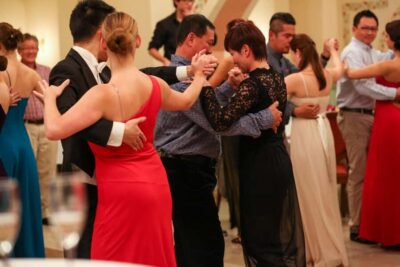
Vienna: Viennese Waltz Beginner Workshop for Couples
Read our review →
From Salzburg Romantic Carriage Ride through the Countryside
Read our review →
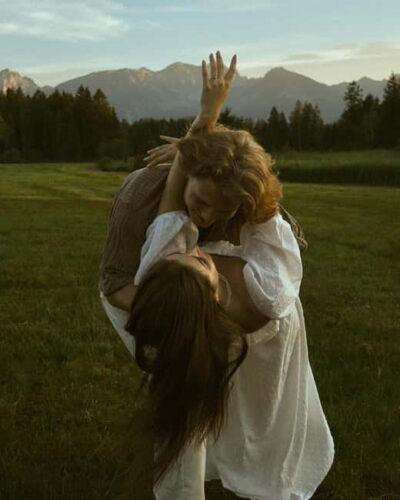
Füssen & Schwangau: Private Photoshoot Couples, Solo & Group
Read our review →
Lists this one appears in