
Review · KYOTO
Kyoto: Enjoy Sushi & Market Tour! Best for Family & Couple!
Making sushi is far more satisfying when you get to shape the meal yourself. At Sushi Gastronomy Lab, you work with fish bought that morning, prepare vinegar rice, and learn three sushi styles: nigiri, temari, and temaki. The class also covers dashi, miso soup, tamagoyaki, and Kyoto seasonings.
I like the small group of up to 10 people, which should give you room to follow the instructions and ask questions. I also like the practical touch: the class includes materials you can use to repeat the sushi at home. The main consideration is time. At about 90 minutes, this is a compact cooking class, not a long market visit or full cultural tour.
Key points to know before booking
- Fresh fish bought that morning: Ingredients are sourced from reliable vendors on the day of the class.
- Three sushi styles: You make nigiri, temari, and temaki, each with a different shape and technique.
- More than sushi: The lesson includes vinegar rice, dashi, miso soup, tamagoyaki, soy sauce, and miso.
- Dessert and coffee included: Handmade Kyoto-style dessert follows the meal, and you can take dessert away.
- Family-friendly format: The small group and hands-on work suit couples and families, including a family with two children who joined in 2024.
- Vegetarian menus available: Request different ingredients in advance if you need a vegetarian menu or other changes.
What this Kyoto sushi class really offers
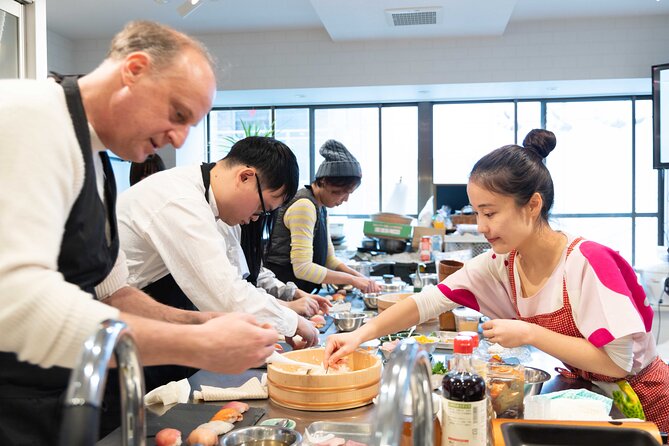
This is a hands-on cooking lesson in central Kyoto, not simply a sushi meal with a demonstration. You sit down to prepare the food, follow the techniques, and eat what you make. That matters because sushi can look simple until you try to handle sticky rice, fresh fish, and delicate shapes yourself.
The 90-minute format keeps the class focused. You do not spend half a day waiting between steps, which makes this a useful fit for a busy Kyoto schedule. At the same time, the short session means the instructor has to keep things moving. You will learn the basics, but you should not expect a full professional chef course.
The class takes place at Sushi Gastronomy Lab, at 3f, 284 Ōgisakayachō in Kyoto’s Shimogyo Ward. The meeting point is near public transportation, and the activity ends at the same address. That simple return to the starting point makes it easy to connect the class with other plans in central Kyoto.
More Market Tours in the world:
- Kyoto: Enjoy Sushi & Market Tour! Best for Family & Couple!
★ 4.8 · 20 reviews
Starting with vinegar rice and Japanese food culture
Sushi begins with the rice, so the class starts in the right place. You learn how to make vinegar rice before shaping the sushi. This is a useful step for beginners because the rice affects both taste and texture. If it is too loose, too firm, or poorly seasoned, even good fish will not rescue the result.
You are also introduced to Japanese food culture rather than being handed ingredients without explanation. Traditional seasonings such as soy sauce and miso are part of the lesson. These familiar items often taste different when you compare them carefully, especially when they are used with rice, fish, soup, and egg.
I like this part because it gives you something you can repeat at home. The lesson is not only about making attractive food for one afternoon. It shows how a few basic components work together: seasoned rice, fresh toppings, broth, soup, and condiments.
Making nigiri, temari, and temaki
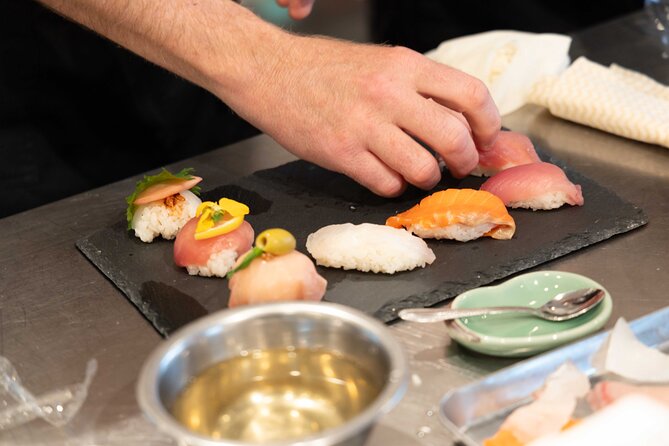
The main cooking section covers three kinds of sushi. Nigiri is the classic hand-shaped piece, with fish placed over a small mound of rice. It looks modest, but getting the rice to hold together without crushing it takes a light touch. You can expect guidance as you form the pieces.
Temari sushi is rounder and more decorative. Its compact shape gives you a chance to focus on appearance and presentation. This is likely to appeal to families and couples because the process has a creative side, not just a set of technical motions.
Temaki is hand-rolled sushi. Instead of forming a small rice base or a round piece, you work with a roll that you can hold in your hand. The three styles make the class more useful than a lesson focused on only one sushi shape. You see how the same ingredients can be presented in different ways.
A hands-on class also gives you a better sense of what you can manage in your own kitchen. The materials provided for home use add to that value. One of the most useful outcomes is that you can try making the three types again after returning home, instead of leaving with only photographs.
Learning dashi, miso soup, and tamagoyaki
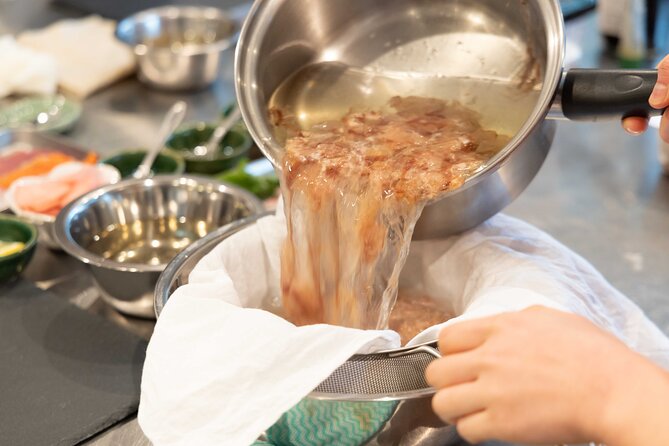
Sushi gets the headline, but the supporting dishes make this class feel more like an introduction to Japanese home cooking. You learn how to make dashi, taste and compare it, and use it in miso soup. Dashi is an important base in Japanese cooking, and tasting different versions helps you notice how broth changes the final dish.
The comparison is especially useful for first-time visitors. You are not simply told that dashi matters. You get to taste it and connect the broth to miso soup and other dishes. The class also introduces miso, giving you a closer look at how seasoning works beyond the soy sauce served with sushi.
You also make tamagoyaki, the Japanese rolled omelet. This is another small dish that looks easier than it is. The rolling process requires control, and the finished egg adds a warm, familiar contrast to raw fish and chilled rice.
These extra lessons make the class a better value than a simple sushi-shaping session. You leave with several cooking ideas, not just a method for placing fish on rice. Still, the schedule is short, so expect an introduction rather than a long, detailed study of every ingredient.
Same place, a different kind of date:
- Romantic Venice: 30 Minute Gondola Ride with Serenade
★ 3.5 · 2,742 reviews - Paris: Romantic Cruise with 3-course Dinner on Seine River
★ 4.3 · 2,295 reviews - Vienna: Romantic Old Town 2-Hour Discovery Tour
★ 4.7 · 816 reviews - Dubrovnik: Romantic Sunset Cruise & Cave Visit with a Local
★ 4.7 · 611 reviews
Fresh fish and the value of the ingredients
The fish is purchased on the morning of the experience day from reliable vendors. That is one of the strongest practical details of the class. It means the ingredients are selected for that day rather than being prepared far in advance.
Fresh fish does not remove every uncertainty from a sushi meal, but it is an important part of a good class. It also gives you a chance to think about the relationship between ingredient quality and simple preparation. Sushi has few components, so the fish, rice, and seasoning all matter.
The cooking area is described as clean, an important point when you are handling food. A clean kitchen also makes the class more comfortable for families, couples, and anyone who prefers a tidy learning space.
Keep in mind that the class does not describe a guided walk through a market. The title mentions the market element, but the information provided focuses on the cooking session and the fish purchased that morning. If you specifically want to browse Nishiki Market or visit a fish market with a guide, you should check that detail before booking.
Dessert, coffee, and optional Kyoto drinks
After the sushi and other dishes, you receive handmade dessert typical of Kyoto, along with coffee. Dessert can also be taken away, which is handy if you are full or need to leave promptly for another plan.
This final course gives the class a more relaxed ending. You have time to finish the meal, talk with the other participants, and hear recommended seasonal sightseeing information from a Kyoto tourism expert. That advice may help you plan the rest of your visit, although the class should not be treated as a full sightseeing consultation.
Sake and beer are available for an extra charge. Alcohol is served only to adults aged 20 and over. Since these drinks cost extra, you should treat them as optional rather than part of the stated price.
How much value do you get for $85.64?
The listed price is $85.64 per person. For a 90-minute activity, that is not the cheapest way to eat sushi in Kyoto. You are paying for more than the meal, though. The fee includes instruction, fresh fish, several cooking tasks, dashi and miso soup work, tamagoyaki, dessert, coffee, and materials that can help you repeat the dishes at home.
The strongest value comes if you enjoy cooking or want a useful memory of Kyoto rather than another restaurant meal. You eat during the class, but the real benefit is the set of skills and ideas you take away. The home-use materials make the price easier to justify because they extend the activity beyond the 90 minutes.
For a family, the cost adds up quickly, especially since the price is per person. Two adults may find it easier to justify than a larger group. Families should decide if the children will enjoy hands-on food preparation, because the value depends on active participation rather than simply sitting down to eat.
The small maximum of 10 participants is another factor. A larger class might cost less, but a group capped at 10 should make it easier to see the demonstrations and receive help. No named guide is provided, so you should not book expecting a particular instructor.
Why families and couples fit this class well
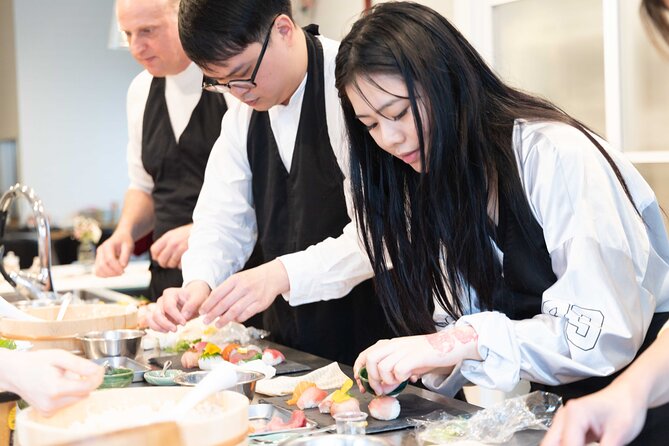
The class is a good match for couples who want a shared activity with a clear result. You can make food together, compare your sushi shapes, and finish with dessert. The creative side of temari sushi gives the session a little more personality than a strictly technical lesson.
Families can also benefit from the short length. Ninety minutes is long enough to feel worthwhile but short enough to be manageable for children. A family with two children joined the class in 2024, showing that the format can work for a family traveling through Japan.
You should still consider your children’s interest in cooking. The class involves preparation, shaping, tasting, and following instructions. It is not a passive entertainment activity. Children who enjoy making things with their hands are likely to get more from it than children who only want to eat.
Vegetarians can request a vegetarian menu. If you need different ingredients for another dietary reason, contact the provider in advance. Do not wait until the class begins, since the fish and other ingredients are prepared for the scheduled session.
Timing, location, and practical planning
The class starts and ends at 3f, 284 Ōgisakayachō, Shimogyo Ward, Kyoto, postal code 600-8095. It is near public transportation, but the information provided does not name a specific station. Give yourself enough time to locate the building and reach the third floor.
Because the activity lasts about 90 minutes and returns to the same place, it can fit neatly into a morning or afternoon itinerary. I would avoid scheduling a major timed attraction immediately afterward. Cooking classes can run close to their stated length, and you may want a few minutes to collect your belongings and finish your dessert.
Booking is often made well ahead, with an average booking time of 59 days before the date. That does not guarantee every date will sell out, but it is a useful sign that you should reserve early if your Kyoto schedule is fixed.
Confirmation is normally provided at booking. If you book within three hours of departure, confirmation is sent as soon as possible and depends on availability. Free cancellation is available up to 24 hours before the start time. Canceling or changing the booking less than 24 hours ahead is not accepted for a refund.
What makes this different from a sushi restaurant
At a restaurant, you can order sushi and focus on the finished meal. Here, you see how the meal is built. You handle the rice, learn the shapes, taste dashi, and prepare tamagoyaki. That process gives you a clearer sense of Japanese food culture than a meal alone.
The class also gives you control over the experience. You can ask questions, work at your own station, and create sushi that is neat, uneven, or somewhere in between. The point is not to produce restaurant-perfect pieces on the first attempt. It is to learn a method you can repeat.
The drawback is that you give up the range and convenience of a restaurant menu. The ingredients and dishes are set around the lesson, with vegetarian or alternative ingredients available only by advance request. If you want a long meal with many types of fish, this will feel limited.
Should you book the Kyoto sushi experience?
Book this class if you want to make your own sushi, prefer a small group, and value skills you can use after the trip. The fresh fish, three sushi styles, dashi tasting, miso soup, tamagoyaki, dessert, and home-use materials give the 90-minute session a lot to cover.
It is especially suited to couples and families with children who enjoy hands-on activities. Vegetarians should contact the provider before booking. You should also confirm the market portion if a guided market walk is important to you, since the supplied details focus on the kitchen class.
Skip it if you want a long market tour, an advanced chef lesson, or the lowest-cost way to eat sushi. For everyone else, the combination of food, instruction, and a practical take-home skill makes this a sensible Kyoto activity, particularly on a day when you want to do more than look at food behind a restaurant counter.
FAQ
How long does the sushi experience last?
The activity lasts approximately 1 hour and 30 minutes.
Where does the class start and finish?
It starts at 3f, 284 Ōgisakayachō, Shimogyo Ward, Kyoto, 600-8095, Japan, and ends back at the same meeting point.
What types of sushi will I make?
You will learn to prepare nigiri, temari, and temaki sushi.
Is vegetarian food available?
Yes. Vegetarian menus are available, but you should request a vegetarian menu or different ingredients in advance.
Are drinks included?
Dessert and coffee are provided after the meal. Sake and beer are available for an extra charge. Alcohol is served only to adults aged 20 and over.
How many people can join the class?
The activity has a maximum of 10 participants.
What is the cancellation policy?
You can cancel up to 24 hours before the start time for a full refund. Cancellations or changes made less than 24 hours before the experience are not accepted for a refund.
New for two around the world
- Sunrise Couple Photoshoot Tour★ 5.0 · 5 reviews
- Romantic Photoshoot in Venice★ 5.0 · 8 reviews
- Make your Romantic Proposal in the City of Love★ 5.0 · 11 reviews
- Romantic Sunrise Boat with Live Banaras Gharana Classical music★ 5.0 · 2 reviews
- Bali Private Couple Tour – Custom Itinerary★ 5.0 · 4 reviews
- Renew your wedding vows on a romantic gondola★ 4.5 · 3 reviews
- Tulum Photo Session for Couples, Friends, Families & Singles★ 5.0 · 2 reviews
- Mauritius Private Night Tour: Romantic dinner, Entertainments & Night lounge★ 4.0 · 4 reviews
Japan Romantic Experiences, side by side.

Kyoto Kimono Rental mimosa |Kimono/Yukata Rental Couple Plan
Read our review →
Kyoto kiyomizu Temple : Maiko and Samurai Couple Photoshoot
Read our review →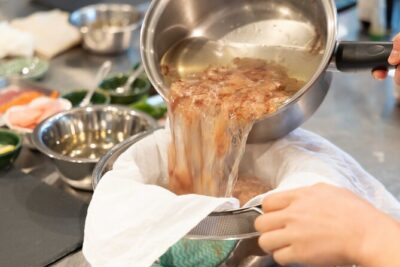
Kyoto: Enjoy Sushi & Market Tour! Best for Family & Couple!
Read our review →
Kurashiki Private Romantic Night in the Observatory Recliners
Read our review →
Romantic Mizuhiki Knot and Omikuji Washi Charm Workshop Ueno
Read our review →

Lists this one appears in