
Review · BERLIN
The Stachelschweine anniversary program: I’ve still got a Tesla in Berlin
Berlin’s Stachelschweine cabaret takes a comic swing at the year 2028, where Germany is broke, electric cars rule the economy, and Berlin itself may be put up for sale. I like the sharp political angle and the way the show mixes black humor, music, and quick Berlin-style jokes into a compact two-hour evening. I also like that you see the performers close up in a small cabaret setting rather than a huge theater.
The main drawback is clear: the performance is in German, and much of the humor depends on political references and wordplay. If you do not understand German well, the songs, rapid exchanges, and satire may pass by quickly.
Key points to know
- A 2028 political fantasy: Chancellor Wagenknecht and Vice Chancellor Pistorius face a national debt crisis, costly promises, and a plan to sell Berlin.
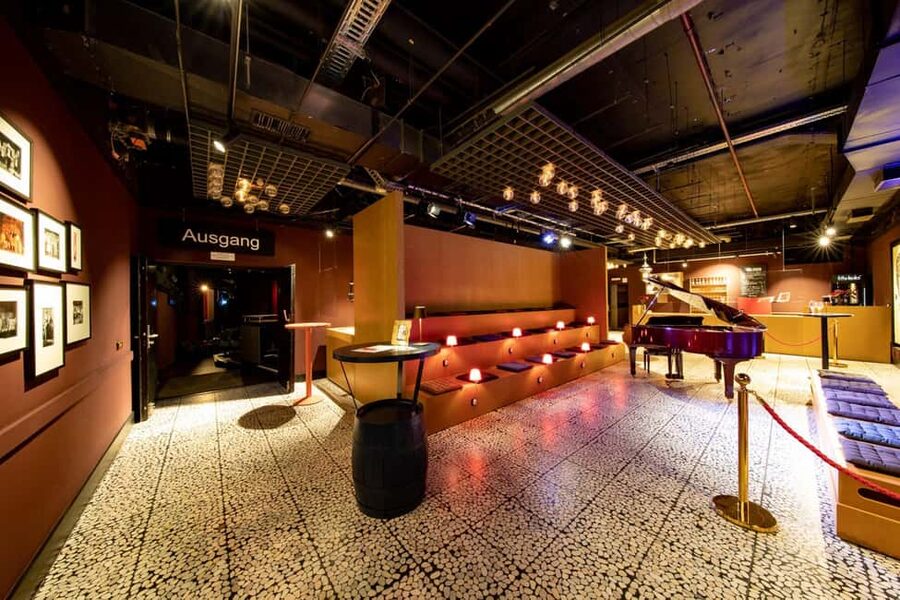
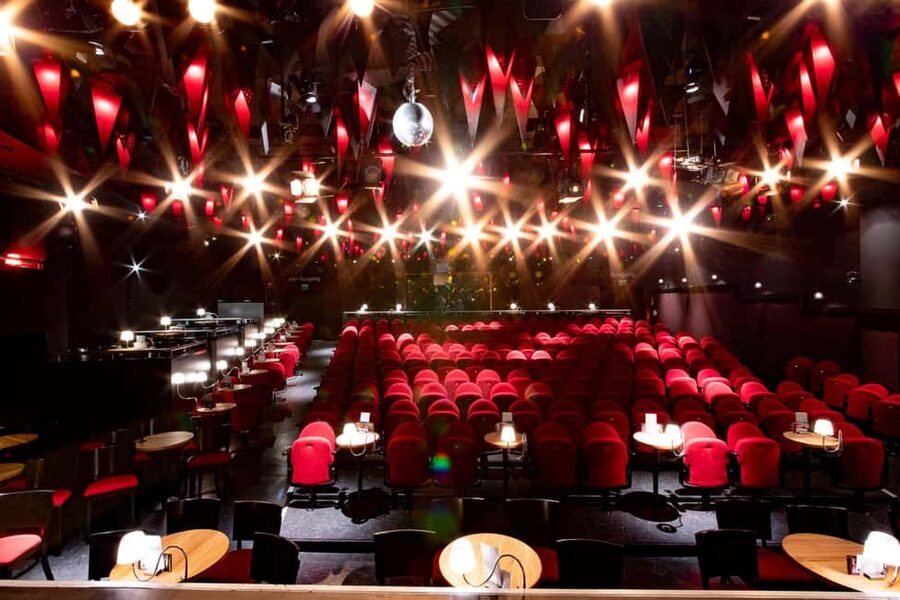
- A small Berlin cabaret venue: Die Stachelschweine sits in the basement of the Europacenter.
- Three named performers: Santina Maria Schrader, Mirja Henking, and Sebastian Stert lead the anniversary show.
- Music is part of the show: Luca Fazioli wrote the music, with arrangements by Martin Rosengarten.
- German is essential: The production is fast, topical, and built around language-based comedy.
- A practical seating tip: Your ticket includes a seating category, not a specific seat. Exchange your voucher at the box office before the performance.
A 2028 Berlin where the country is up for sale
The basic joke is wonderfully large. Germany’s debt keeps climbing, cheese sandwiches cost 14 euros, BASF and Bayer have moved to Asia, and Volkswagen and BMW have become part of Tesla. The nation’s credit rating has dropped to BB, with half of all tax income going toward interest payments.
That gives the writers plenty to work with. The show does not use a distant science-fiction future. It takes familiar anxieties about debt, housing, transport, industry, technology, and political promises, then pushes them a few steps too far.
The result is a political farce set in a Germany that still feels close enough to recognize. You get a Chancellor Wagenknecht and Vice Chancellor Pistorius, along with election promises that include pensions from age 55, free public transport, and rent caps at 1989 levels.
I like this setup because it gives the cabaret a clear engine. The jokes are not a string of unrelated sketches. They grow from a single absurd problem: how can the government pay for everything it promised when the country is nearly broke?
More ways to spend a day together around Germany:
- Hamburg: Private Couples’ Photoshoot and Walking Tour
★ 4.9 · 212 reviews - Erfurt: On the road with the Brückenkrämer. Tour with anniversary tasting.
★ 4.6 · 132 reviews - Bad Schandau: Romantic end of the day tour (L33)
★ 4.6 · 100 reviews
The secret plan for Berlin
Vice Chancellor Pistorius comes up with a solution. If the government needs money, it can sell Germany’s silverware: Berlin.
That idea drives the second half of the plot. A well-known electric-car developer and microblogging service owner enters the picture, and the plan seems ready to solve every problem at once. Then, as you would expect from a political comedy, everything goes wrong.
The premise allows the show to aim at several targets at once. Berlin becomes both a real city and a valuable political object. Technology becomes both a promise and a threat. Politicians make grand claims, while the bill for those claims keeps growing.
You do not need to agree with every political position in the show to understand its method. The comedy works by taking public debates and making their hidden contradictions visible. Free transport sounds generous, but who pays? Rent caps sound popular, but what happens to the wider economy? Selling Berlin sounds ridiculous, but why does the idea feel just close enough to reality to be funny?
That is the appeal of German political cabaret. It gives current events a stage, a rhythm, and a punch line.
Three performers carry the evening
The anniversary production stars Santina Maria Schrader, Mirja Henking, and Sebastian Stert. With only three named performers, the show depends on quick changes in voice, character, and point of view.
That small cast suits the cabaret format. Instead of spreading attention across a large ensemble, the production keeps its focus on the actors and the written material. You can expect the performers to move rapidly through politicians, officials, business figures, and other characters tied to the 2028 crisis.
The writing comes from Frank Lüdecke and Sören Sieg, with Lüdecke also directing. That combination matters. The person shaping the script is also guiding the pace and tone onstage, so the production has a clear comic point of view.
This is not a passive evening. The humor comes quickly, and you need to keep up with who is being mocked and why. The show’s small scale makes the exchange feel direct, but it also means there is little room for the kind of visual spectacle that might help bridge a language gap.
Music gives the satire some lift
The show includes plenty of music, with compositions by Luca Fazioli and arrangements by Martin Rosengarten. That is useful in a political cabaret, where a long run of spoken arguments can become heavy.
Songs can compress a complicated issue into a few memorable lines. They also change the pace of the evening, moving you from political explanation to performance and back again. You should not think of this as a concert, though. Music supports the satire rather than replacing it.
The mix of black humor and Berlin cool is central to the production’s tone. The show can take a grim subject, such as national debt or the sale of a capital city, and treat it with a dry, stylish edge. If you enjoy comedy that stays close to uncomfortable subjects, this balance will likely work for you.
If your German is limited, songs may be among the hardest sections to follow. Spoken German can sometimes be understood from context. Wordplay and lyrics are less forgiving.
Same place, a different kind of date:
- Private Romantic Urban & Street Photoshoot
★ 5.0 · 69 reviews - Heidelberg: City of Romance 2-Hour Walking Tour
★ 4.8 · 60 reviews - Boat trip on the Biggesee: lake romance in the Sauerland mountains!
★ 4.1 · 42 reviews - Meißen: Guided Walking Tour ‘Romantic Evening Stroll’
★ 4.8 · 32 reviews
What the two-hour schedule feels like
The listed duration is two hours. That is long enough for the production to build a story and develop its central joke, but short enough to fit neatly into an evening in Berlin.
The show is described as fast-paced, current, and clever. You should expect a brisk performance rather than a slow theatrical drama. The plot moves from the government’s financial crisis to Pistorius’s proposal, then toward the outside figure who appears ready to make the plan work.
Because the comedy is current, some references may feel especially tied to the political moment in which the show was written. That is part of the value of cabaret, but it can also be a limitation. A joke about a current politician, policy, or business figure may land strongly today and feel less clear later.
The anniversary setting adds another layer. This is the 75th anniversary program of Die Stachelschweine, so the show is not just a regular night of political comedy. It marks the long-running identity of a theater that has made satire its main business.
Finding Die Stachelschweine at the Europacenter
The entrance is in the basement of the Europacenter. That detail is important because this is not a grand street-front theater that is impossible to miss.
Give yourself enough time to find the entrance and exchange your voucher at the box office. Your voucher is not the final seating arrangement. You need to swap it at the theater before the show begins.
You can select a seating category when booking, but you cannot choose a particular seat. That means you should not expect a numbered place to appear on the ticket. The seating process is handled at the theater, so arrive with the voucher ready and check in before the performance starts.
This arrangement is common in smaller venues, but it is easy to misunderstand if you are expecting a conventional assigned seat. One recent booking note specifically points out that the ticket does not show a seat or table number. Treat the box-office exchange as part of the arrival routine, not as a problem with your booking.
A small venue with a direct feel
The booking information describes a small group, limited to six participants. That likely refers to the size of the activity booking rather than the full theater audience, since the show itself is a public cabaret performance.
Either way, Die Stachelschweine is designed around close contact between performers and audience. The basement setting under the Europacenter gives the venue an intimate cabaret identity rather than the formal feel of a large concert hall.
I like this type of setting for satire. Political comedy works best when the performers seem close enough to answer back. A small room can make a joke feel more pointed, although it can also make the performance feel less anonymous and more exposed.
The theater is wheelchair accessible, which makes the venue a workable choice for many visitors with mobility needs. If you need specific seating assistance, the available information only confirms accessibility, so ask the theater when exchanging your voucher.
Is the $53 price fair?
At about $53 per person, this is not a budget attraction, but the price covers a full two-hour live production in a specialist Berlin cabaret theater.
The value depends heavily on your language ability and interest in political comedy. If you understand German and want an evening focused on live satire, the price is reasonable for a substantial theater experience. You are paying for a complete production with three performers, original music, written material, direction, and an established venue.
If you do not speak German, the value drops sharply. You may still appreciate the actors, music, and setting, but the main product is the text. This is not a visual show where you can follow the story through scenery and action alone.
I would compare it with the cost of other evening entertainment in Berlin, not with a museum ticket or a short sightseeing stop. You get two hours of performance, but you do not get food, a guided city tour, or a translated version of the script.
Who will enjoy this anniversary program?
This production fits you best if you:
- Speak German comfortably
- Follow German politics and public debates
- Enjoy satire aimed at politicians, business leaders, and technology
- Prefer live theater to a standard sightseeing activity
- Want to see a long-running Berlin cabaret institution
- Like fast jokes, music, and a slightly dark comic tone
It is less suitable if you want a relaxed show with simple language, subtitles, or a plot that can be followed without cultural context.
The show also suits someone who has already seen Berlin’s major sights and wants a night focused on local performance culture. You will not get a tour of the city, but you will get a comic view of how Berlin and Germany imagine their own future.
The German-language question matters most
The organizers are direct about this: the play is performed in German, and you need to know German.
That warning should guide your decision more than the good rating or the attractive central location. Political cabaret relies on timing, accents, references, double meanings, and short verbal turns. Missing a sentence can mean missing the setup for the next joke.
Basic German may not be enough. You will get more from the show if you can follow spoken conversation at speed and recognize names and political themes. You do not need to know every detail of German politics, but the more familiar you are with the public figures and debates being parodied, the more the material will land.
For a German-speaking visitor, this language focus is a strength. The show can respond to current events without stopping to explain every reference. For everyone else, it is a serious limitation, not a minor footnote.
Booking, cancellation, and arrival tips
You can cancel up to 24 hours before the performance for a full refund. The reserve-now, pay-later option also lets you hold a place without paying immediately, which is useful when your Berlin schedule is still changing.
Check the available starting times before booking. The duration is fixed at two hours, but the performance time is not stated in the activity details.
Bring your voucher and exchange it at the box office before the show. Since the ticket does not assign a specific seat, do not wait until the last moment and assume you can walk straight into the room.
The booking is listed as accessible by wheelchair. Seating is selected by category, not by exact seat, so anyone needing a particular position should confirm arrangements with the theater in advance.
Should you book Die Stachelschweine?
Book it if you want German-language political cabaret with a current Berlin angle, a small theater setting, live music, and a cast led by Santina Maria Schrader, Mirja Henking, and Sebastian Stert.
Skip it if you do not understand German well enough to follow rapid dialogue and political wordplay. The central idea is funny on paper, but the value of the evening comes from the performance of that material, not from the setting alone.
For the right audience, this is a smart way to spend two hours in Berlin. It offers a local theater experience, a pointed view of Germany’s political worries, and a 2028 fantasy in which the country’s last asset may be the city under your feet.
FAQ
Where does the Stachelschweine anniversary program take place?
The performance takes place at Die Stachelschweine theater in Berlin. The entrance is in the basement of the Europacenter.
What is the show called?
The anniversary program is called I’ve Got Another Tesla in Berlin.
How long does the performance last?
The listed duration is two hours.
What language is the play performed in?
The play is performed in German. You need to know German to follow the production properly.
Who performs in the show?
The cast includes Santina Maria Schrader, Mirja Henking, and Sebastian Stert.
Who wrote and directed the production?
The program was written by Frank Lüdecke and Sören Sieg. Frank Lüdecke directed it.
Does the show include music?
Yes. The program includes plenty of music. Luca Fazioli wrote the music, and Martin Rosengarten created the arrangements.
Can I choose a specific seat?
You can select a seating category, but you cannot choose a specific seat. Exchange your voucher at the box office before the performance.
Is the theater wheelchair accessible?
Yes. The activity is listed as wheelchair accessible.
Can I cancel my booking?
You can cancel up to 24 hours in advance for a full refund. A reserve-now, pay-later option is also available.
New for two around Germany
- Neuschwanstein Exclusive Romantic Winter Tour INCL. TICKETS★ 5.0 · 6 reviews
- Neuschwanstein Castle Couple, Wedding & Portrait Photoshoot★ 5.0 · 9 reviews
- Romantic Couple Photoshoot in the Heart of Berlin★ 4.0 · 4 reviews
- Private Alster Lake romantic Tour in a Real Venetian Gondola★ 5.0 · 3 reviews
- Berlin Love Story: Surprise Proposal Photography Session★ 5.0 · 7 reviews
- Exclusive private boat trip for couples in Heidelberg★ 5.0 · 2 reviews
- Heidelberg Old Town: Romantic Walking Tour & Game★ 4.0 · 7 reviews
- Hamburg Alster Lake romantic Tour in a Real Venetian Gondola★ 5.0 · 5 reviews
Berlin Romantic Experiences, side by side.
Berlin: Evening Boat Cruise – Romance & Moonlight
Read our review →
Romantic Berlin Rickshaw City and Photo Tour – incl. pick-up
Read our review →

Lists this one appears in